
How Often Should You Grease a 5th Wheel?
If you’re new to pulling a trailer, you’ve probably wondered: how often should I grease my 5th wheel?
It’s a simple question, but it’s one of the most important maintenance tasks for safe hauling. Proper greasing of your semi reduces friction, minimizes wear on expensive parts, helps to prevent corrosion, and creates a better hauling experience overall.
At Gear Head Lube, we work with semi drivers and fleet managers who rely on their equipment every single day. One thing we’ve learned is that many hauling problems can be prevented with consistent lubrication and maintenance.
We’ll explain how often you should grease a fifth wheel, signs that it needs to be lubricated, the risks of neglecting maintenance, and best practices for keeping your equipment operating safely.
Does Greasing a 5th Wheel Even Matter?
A fifth wheel hitch experiences tremendous pressure during hauling.
As your truck and trailer move independently over bumps, corners, and uneven terrain, the kingpin and connecting plate are constantly pivoting and sliding against each other. Without proper lubrication, metal-on-metal contact creates friction that can lead to:
- Premature wear of the fifth wheel surface, including corrosion and rust formation
- Excessive kingpin wear
- Difficult connecting and disconnecting
- Increased towing resistance
- Negatively affects steering stability
- Sticking between fifth wheel trailer increases steering resistance
- Shortens life span of steer tires
- Expensive and time-consuming repairs or replacements
Keeping the fifth wheel lubricated helps to keep your kingpin lubricated. Making sure that all parts of your hauling set up are lubricated as they need to be will benefit you in more ways than one. Additionally, a quality grease acts as a protective barrier between moving surfaces, helping extend the life of your equipment and improve hauling performance. Quality grease also lasts longer on your fifth wheel and sticks better. Here at Gear Head, we use only the highest quality grease in our products, giving your confidence that your fifth wheel is properly lubricated.
The Short Answer: Grease Your 5th Wheel Before Every Trip
As a general rule, you should inspect and lubricate your fifth wheel plate before every single trip.
For occasional users, this might mean applying fresh grease several times per season. For those who haul frequently, weekly inspections and regular lubrication might be necessary.
Most fifth wheel plate manufacturers recommend maintaining a visible layer of grease on the plate surface where the trailer’s kingpin connects.
If the grease has worn away, appears contaminated, or has collected dirt and debris, it’s time to clean the plate and reapply your grease
Factors That Affect How Often You Need to Grease a 5th Wheel
While “before every trip” is a good baseline to start at, several factors can increase how often you should grease up.
Type of Hauling
In today’s trucking industry, there are primarily two types of users; those that frequently haul different trailers and those that are generally pulling the same trailer.
Those frequently changing trailers are doing a lot of “drop and hooks”. If the new trailer being connected to does not have much grease on its underside, then some amount of the grease on your fifth wheel will be transferred to the trailer surface while you are pulling that trailer. Even if you pull that trailer only a relatively short distance, your 5th wheel may not have much grease left on it when you unhook. Thus, it is very important if you do a lot of drop and hooks to make sure you are checking your 5th wheel every time you unhook from each trailer and add grease if needed to keep an adequate amount on your plate.
For those pulling the same trailer most of the time, you still need to inspect your 5th wheel for adequate grease on a frequent basis. Gear Head Lube grease is known to last longer than competitive grease products. Thus you can extent the time or mileage interval for 5th wheel inspection thus saving valuable time.
Towing Frequency
The more miles you pull your trailer, the faster grease breaks down.
A commercial hauler driving daily should inspect lubrication levels much more frequently than an occasional hauler.
Weather Conditions
Rain, snow, road salt, dust, and mud all impact grease performance.
Wet conditions can wash away lubricants, while dusty environments can contaminate grease and accelerate wear.
If you haul in harsh conditions, inspect your hitch after every trip.
Trailer Weight
Heavier trailers place greater pressure on the hitch assembly. Increased load means increased friction, which can cause grease to wear away more quickly.
Storage Conditions
If your trailer sits outdoors for extended periods, moisture and temperature fluctuations can degrade lubrication.
Even if the trailer hasn’t moved, inspect the fifth wheel plate before your next trip to see if you should re-apply grease.
Signs Your Fifth Wheel Needs Grease
A visual inspection often tells you everything you need to know.
Things you should look for:
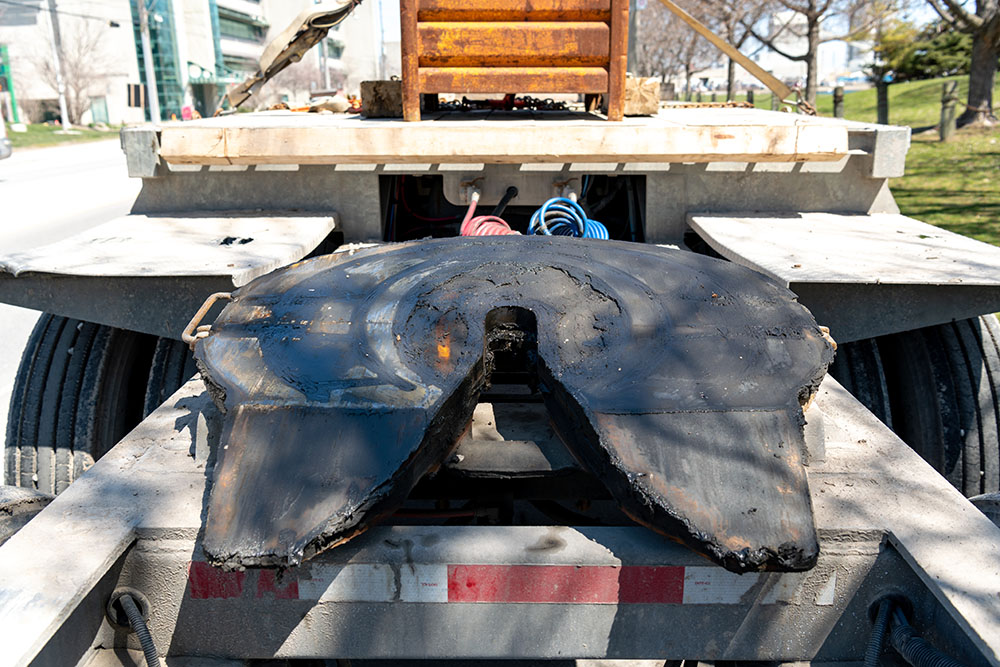
Dry or Bare Metal
If you can see exposed metal on the plate, the lubrication has worn away and should be replaced immediately.
Squeaking or Grinding
Unusual noises during turns, starts, or stops often indicate insufficient lubrication.
Rust Formation
Surface rust suggests moisture has reached unprotected metal surfaces.
Difficult Coupling
If hooking up the trailer feels rough or requires extra effort, friction may be increasing due to inadequate lubrication. If that’s the case, it’s time to grease.
Dirty or Contaminated Grease
Grease mixed with dirt, sand, or road debris can become abrasive rather than protective.
In these cases, cleaning and reapplication are important steps before you haul
How to Properly Grease a Fifth Wheel Using Gear Head Grease
Proper application is just as important as lubrication frequency. Read our article on this here and review our application guide.
Should You Use Grease or a Lube Plate?
Many trailer owners use a lube plate instead of applying grease directly to the plate.
A lube plate is a durable plastic disc that installs on the trailer’s fifth wheel surface and creates a low-maintenance connection.
Benefits include:
- Cleaner operation
- Less grease buildup
- Easier maintenance
- Reduced mess on clothing and equipment
However, even if you use a lube plate, you should still inspect and lubricate other components of the fifth wheel according to manufacturer recommendations. Gear Head fifth wheel grease pads work great with lube plates, making greasing your fifth wheel a simple, effective job.
Lube plates reduce maintenance, but they do not eliminate it entirely.
Why Choose Gear Head Grease
Not all grease products are created equal. For fifth wheel applications, you need a grease that you can rely on. Gear Head’s high polarity creates a much stronger bond to metal, allowing full lubrication and deeper penetration petroleum products can’t achieve. Our non polar end creates an unmatched water barrier, making it the absolute best technology for preventing the damaging results of rust and corrosion.
Using Gear Head’s premium lubricant can significantly improve component longevity and performance. Since there is no grease gun needed when you use Gear Head, our grease remains sticky. It also lasts twice as long, meaning you have to grease less often.
Common Fifth Wheel Lubrication Mistakes
Even experienced trailer owners occasionally make maintenance errors.
Applying Too Much Grease
More isn’t always better. Excess grease attracts dirt and debris that can accelerate wear.
Using Gear Head Grease pads, you will always apply the exact amount of grease you need. There’s no guessing game – just 2 pads.
Ignoring Other Fifth Wheel Components
Many people focus only on the fifth wheel plate and overlook locking jaws, pivots, and moving mechanisms.
These parts also require regular inspection and lubrication.
Waiting Until Problems Appear
If your fifth wheel is already squeaking, grinding, or showing visible wear, lubrication is overdue.
Preventive maintenance is much less expensive than repairs.
Using the Wrong Product
Low-quality lubricants may break down quickly under heavy loads.
Always choose a grease suitable for fifth wheel applications.
Not Realizing Fifth Wheel Lubrication Affects Steer Tire Wear
When friction increases between the tractor and trailer, it can create additional steering resistance, affecting handling and contributing to premature steer tire wear over time.
How Long Does Fifth Wheel Grease Last?
There is no universal mileage interval because conditions vary significantly.
The timeline for when you should grease depends on how many miles you haul, the conditions you’re hauling in, your trailer weight, and your storage conditions. Inspecting your fifth wheel regularly is your best maintenance strategy.
Gear Head grease pads last longer than traditional grease gun grease because it is designed to stay bonded to surfaces and provide lasting protection. Since rain, snow, and harsh weather conditions can break down and wash away traditional grease, using a high-quality lubricant like Gear Head helps maintain protection and reduce the frequency of reapplication.
Inspect your fifth wheel before every trip and reapply grease whenever coverage appears inadequate.
So, how often do you grease a 5th wheel?
For most drivers, the safest answer is before every trip and anytime the existing grease shows signs of wear, contamination, or insufficient coverage.
Regular inspections, proper greasing practices, and high-quality grease can dramatically extend the life of your fifth wheel components while helping ensure safer hauling. Consistent fifth wheel maintenance pays off in reduced wear, smoother operation, and greater peace of mind. When it comes to safety, a few minutes spent greasing your fifth wheel with a premium product like Gear Head Grease Pads can help prevent costly repairs and keep your equipment performing at its best.