
If you’ve spent any time behind the wheel of a heavy-duty rig, you know that the fifth wheel is the literal “pivot point” of your livelihood. Let’s be honest: when most drivers think about how to grease a 5th wheel, they picture a messy, time-consuming chore involving ruined shirts, slippery gloves, and a grease gun that never seems to work quite right.
Maintenance is non-negotiable, but the way you do it has changed. Whether you are an owner-operator or a fleet manager, knowing how to properly lubricate your fifth wheel is the difference between a smooth ride and a costly repair.
In this guide, our experts are breaking down the old-school methods versus the modern, mess-free standard set by Gear Head Lube.
Why Proper Fifth Wheel Lubrication is Vital
Before we get into the “how,” we need to understand the “why.” The fifth wheel plate and the trailer’s kingpin plate are two massive pieces of steel under thousands of pounds of pressure. Without a consistent layer of lubricant, you face three major risks:
Steering Resistance: If the plates “lock up” or “bind” due to friction, the tractor cannot pivot smoothly, which poses a safety concern. This causes the truck to “track” poorly, making it harder to stay in your lanes, especially when road surfaces are slippery, in high winds or on tight curves.
Component Wear: In our case, friction causes metal wear and fatigue. Without grease, the metal on your fifth wheel plate and the trailer’s bolster plate will literally grind each other down, leading to expensive resurfacing or a total replacement of the hitch.
Tire Wear and Fuel Economy: Believe it or not, a dry fifth wheel can hurt your bottom line at the pump. When the trailer doesn’t pivot easily, it creates lateral resistance that causes your tires to scrub against the road, increasing wear and decreasing fuel efficiency.
Driver Fatigue: A poorly lubricated fifth wheel makes the truck handle “heavy.” You’ll feel every bump and turn in your shoulders and back by the end of a long shift.
The Traditional Method (The Messy Way)
For decades, the standard answer to “how do you grease a 5th wheel” involved a bucket of chassis grease and a spatula, or a high-pressure grease gun. Here is how that usually looks:
1. Clean the Plate: Use a putty knife or scraper to remove old, gritty grease that has trapped road salt, sand, and dirt.
2. Apply the Grease: Using a grease gun or a paddle, you spread a thick layer of petroleum-based grease across the top of the plate. In most cases, truckers end up applying more grease than necessary. The theory is that when the trailer is lowered and the truck turns, the grease will be pushed outward to cover the plate. However, that excessive grease ends up getting pushed out entirely, making a mess of your truck and trailer. This is also a waste of the grease, costing you money in the long run.
3. The Cleanup: You spend 10 minutes trying to get the grease off your hands, your clothes, and the side of the truck frame.
The Downside:
Traditional grease is a magnet for road grime. Within a few hundred miles, that “fresh” grease becomes an abrasive paste. Plus, petroleum grease is “non-polar,” meaning it just sits on the surface. Under extreme pressure, it gets squeezed out the sides, leaving the center of your plate bone-dry and unprotected.
How to Grease a 5th Wheel: The Gear Head Lube Way
At Gear Head Lube, we’ve replaced the excessive grease and the grease gun with our Patented Soy-Based Grease Pads. It is the cleanest, fastest, and most effective way to maintain your fifth wheel.
Step 1: The Two-Pad Placement
(Yes, there’s just 1 step)
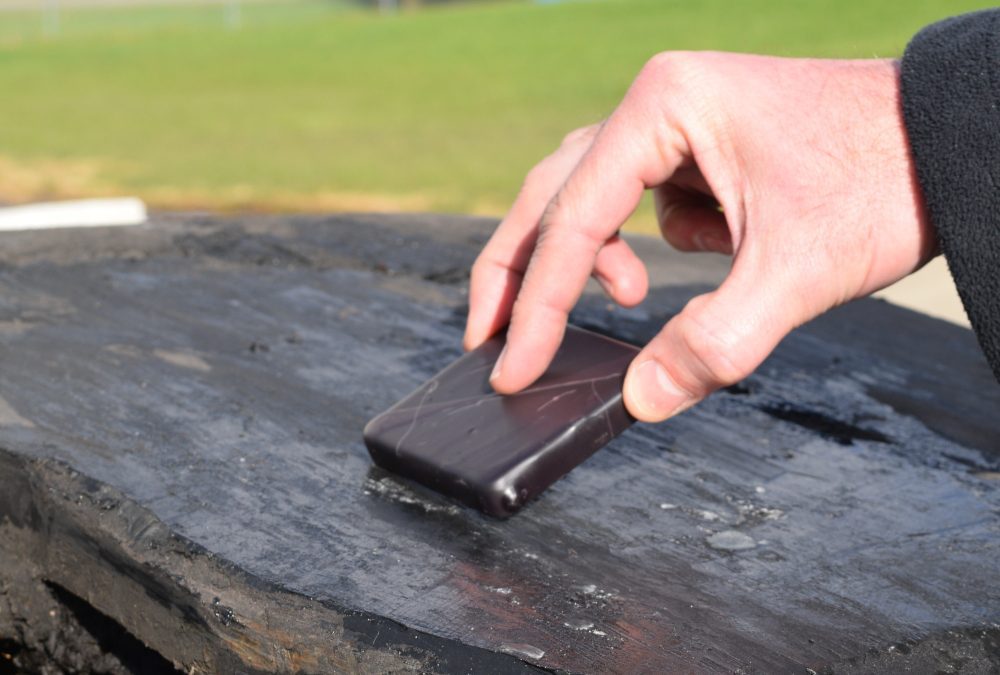
Take two Gear Head Lube 3″x3″ pads out of the box. You don’t need gloves, our grease pads are dry to the touch. Place one pad at the 3 o’clock position on the fifth wheel plate (roughly halfway between the pivot pin and the outer edge). Place the second pad at the 9 o’clock position. You have put on the proper amount of grease. You’re done!
The Benefits of Switching to Gear Head Lube
When you move away from traditional grease and toward Gear Head Lube pads, you aren’t just changing your routine; you’re upgrading your equipment’s protection.
Superior Metal Adhesion (Polarity)
Traditional petroleum grease is non-polar. Think of it like water on a waxed car, it just beads up and sits there. Gear Head Lube uses a soy-based formula that is polar. Our molecules are naturally, “magnetically” attracted to the metal of your fifth wheel. Instead of squeezing out the sides when you hit a bump, our lubricant “clings” to the steel, filling in the microscopic pores of the metal.
Drastic Time Savings
A traditional greasing session can take 15 minutes when you factor in tool prep and cleanup. With Gear Head Lube, the process takes less than 30 seconds.
Environmental Responsibility
Traditional grease contains a large amount of heavy metals, making it a major pollutant. As it drips off your truck, it enters the soil and water systems. Gear Head Lube is a USDA Certified Biobased Product. It is non-toxic, biodegradable, and made from American-grown soybeans. You can protect your rig and the environment at the same time.
Cleanliness and Professionalism
A grease-covered chassis looks sloppy and makes inspections more difficult. Because Gear Head Lube pads provide a measured dose of lubricant, you don’t have “over-grease” running down your frame rails or getting onto your airline pigtails. Your truck stays cleaner, and so do your hands.
Maintenance Schedule: When Should You Re-Grease?
While every route and weather conditions are different, a good rule of thumb for using Gear Head Lube is:
1. Every time you drop and hook: This ensures the “fresh” side of the kingpin plate on the next trailer is also protected.
2. Every week: If you are “married” to one trailer for long hauls, the pads provide long-lasting protection. However, do a quick visual check during your pre-trip. If the plate looks dry or you hear “groaning” or “popping” during slow-speed turns, it’s time for a fresh set of pads.
3. After heavy rain or snow: While our soy-based formula is highly water-resistant, extreme road spray can eventually wear down the lubricant barrier over several days of driving.
There is a big difference between “putting grease on a fifth wheel” and “lubricating a fifth wheel.” One is a messy habit; the other is a precision maintenance step.
By using Gear Head Lube grease pads, you save time, protect your equipment with superior molecular bonding, and keep your truck looking professional. Our soy-based technology proves that you don’t need a mess to get maximum protection.
Whether you need a 6-pack for your personal rig or a bulk case for your entire fleet, we’ve got the high-performance, sustainable solution you need to keep your wheels turning smoothly.